
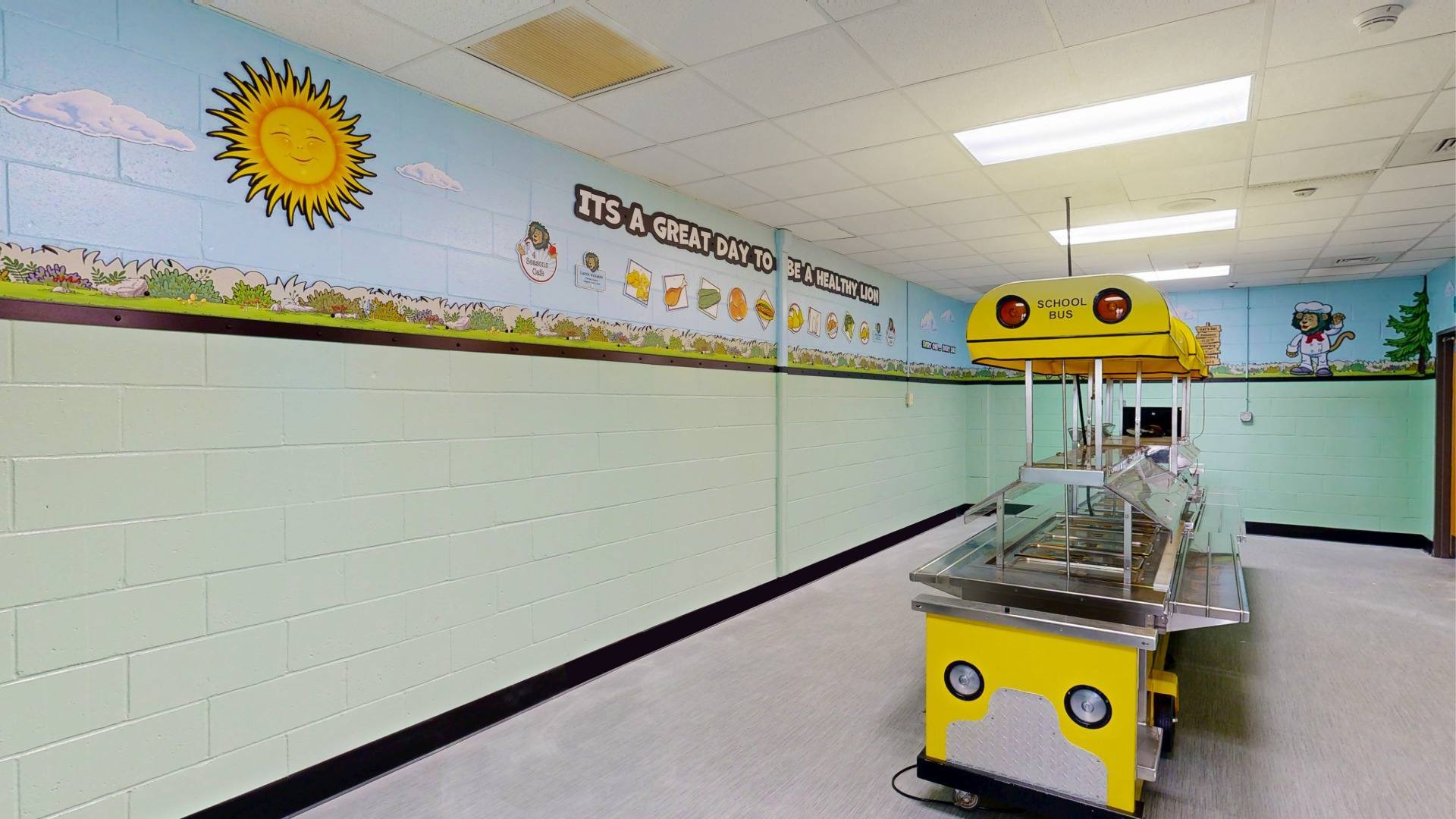
The food can be good and the room can still be working against you.
Here is a frustrating situation for any food service team. The food is good. The menu is solid. The staff work hard. And participation still is not where it should be. Before anyone blames the recipes, it is worth looking at the room itself. A school cafeteria's layout, signage, and overall feel can quietly push students away before they taste a thing, because students decide fast, and a space that feels confusing or forgotten gives them a reason to opt out.
Participation is never about one thing. Food quality, pricing, the schedule, the service model, and student preferences all matter. But design is one of the few levers a school controls directly, and it is the one most often ignored. Here are the seven school cafeteria design mistakes that cost the most.
1. Treating the school cafeteria like leftover space
In most schools, cafeteria space gets designed last, after the classrooms, the gym, and the front office. That is backwards. It is one of the most-used rooms in the building, the single space nearly every student passes through every day. A room that important should not be an afterthought, but in most buildings it is exactly that.
2. Hiding the menu
If students cannot see the menu until they are already in line, the menu is not doing its job. Tiny boards, cluttered printed calendars, and poor placement all force students to commit before they know their options. The menu needs to be visible early, while a student is still deciding whether to get in line at all.
3. Leaning on generic posters instead of a system
A wall of random motivational posters reads as clutter, not care. It also competes for the same attention you need for the things that matter: the menu, the line, the choices. A branded, consistent look does the opposite. It feels intentional, and it helps students focus on the decisions in front of them.
4. Leaving the serving line to guesswork
The serving line is where decisions actually happen, so it is the worst place to leave students guessing. Where does the line start? Where are the fruits and vegetables? Which items make up the meal? Where do you check out? When the line has no visual cues, every one of those questions becomes a slowdown, and slow lines cost you the students who simply run out of time.
5. Designing for adults instead of students
Adults often prefer clean and minimal. Students need energy, clarity, and cues built for their age. A high school cafeteria should not look like an elementary one, and an elementary space should not feel sterile. Design for the people who actually eat there, not the people who sign off on it.
6. Forgetting breakfast and grab-and-go
More schools are serving breakfast through grab-and-go stations, hallway kiosks, and mobile points of service. Those models only work if students can find them and understand them quickly. A breakfast program with no visible signage is a program a lot of students will simply walk past on their way to class.
7. Letting the room feel like it belongs to no one
A cafeteria with no mascot, no school colors, and no identity feels like a holding pen, and students treat it like one. When the room clearly belongs to their school, they treat it like theirs. That shows up in how they behave in it and in whether they come back tomorrow.
An honest word on what design can and cannot do
Design will not fix a menu students do not like or a price that pushes families away. It is one piece of a larger participation puzzle, not a magic fix, and anyone who promises that graphics alone will raise your numbers is overselling. But design is the piece most fully in your control, and it is often the cheapest lever you are not pulling. A cafeteria that is easy to read, quick to move through, and clearly built for students removes the friction that quietly sends kids elsewhere.
Where participation actually comes back
Participation improves when the room supports the meal instead of fighting it. The food still has to be good and the price still has to work. But none of that matters if the space makes a student hesitate at the door. Fix the room, and you stop losing the students you already earned.
--- FREQUENTLY ASKED QUESTIONS ---
What are the most common school cafeteria design mistakes?
The most common school cafeteria design mistakes are treating the room as leftover space, hiding the menu until students are in line, using generic posters instead of a branded system, leaving the serving line unmarked, designing for adults instead of students, ignoring breakfast and grab-and-go, and letting the room feel like it belongs to no one.
How does cafeteria design affect meal participation?
Cafeteria design affects participation because students decide fast and read the room before they commit. A confusing, unmarked, or forgotten space gives them a reason to opt out, while a clear, branded room that is quick to move through removes friction. Design will not fix bad food, but it stops a good program from losing students at the door.
Where should the menu go in a school cafeteria?
Put the menu where students decide whether to get in line at all, not after they are already committed. Tiny boards and cluttered printed calendars hide the choices. Show the menu early and visibly, with clear visuals, so students can see their options before the line, not fifteen feet into it.
Can cafeteria design alone increase participation?
No. Design is one lever in a larger participation puzzle, not a magic fix. Food quality, pricing, the schedule, and the service model all still matter. Anyone promising that graphics alone will raise your numbers is overselling. But design is the cheapest lever most schools control and leave unpulled.
How do you make a cafeteria feel like it belongs to students?
Give the room an identity: a mascot, school colors, and clear school branding instead of a blank, institutional feel. When a cafeteria visibly belongs to a school, students treat it as theirs. That ownership shows up in how they behave in the space and in whether they choose to come back the next day.