


Sean Barton
Chief Operating Officer
Questions about your own room?
One short call to walk through the room, the goals, and what is possible. No pressure, no obligation.
Overview
-
There is a room in your school where every single student goes every single day: it is bigger than most classrooms and handles more foot traffic than the gym.
-
Libraries get updated, gyms get new floors, and front offices get fresh paint—while the cafeteria usually just gets a mop.
-
The cafeteria carries immense emotional and social weight: serving food, facilitating socializing, offering a mental break, and providing consistency for students in need.
-
Here is how spatial principles turn a neglected, beige cafeteria into an inspirational space where students feel welcomed and cared for.
The Most Overlooked Room on Campus
Think about the physical reality of a school campus. There is a room in your school where every single student goes, every single day. It is bigger than most classrooms and handles more foot traffic than the gym. More social dynamics play out there before noon than in the hallways all week, yet in most schools, it looks like nobody has thought about it in twenty years.
Somewhere along the way, school cafeterias got stuck. They became the room that just has to work, not the room that gets any attention. Libraries get updated, gyms get new floors, and front offices get fresh paint, while the cafeteria gets a mop. That gap between how much the room matters and how much love it gets is starting to catch up with schools in ways they are only now recognizing.
Daily Student Foot Traffic
Most Active Social Space on Campus
Major Renovations in 20+ Years
Impact on Student Wellbeing
The Cafeteria Is Doing More Than Serving Food
Think about everything that happens in that room on a given day—students are eating, socializing, and taking a mental break from whatever happened in third period.
- A Hub for Eating and Socializing: Students gather to share meals, build relationships, and connect with peers.
- A Critical Mental Break: It serves as a necessary space where students can decompress from academic testing and classroom stress.
- Nutritional Baseline: For kids who get free lunch, it might be the most consistent meal of their day.
- Finding Where They Fit: For new students, it is where they figure out where they fit in the social dynamics of the school.
- Student Autonomy: For every student, it is one of the few times during school where they are not being told exactly what to do.
That is a lot of weight for one room to carry. And when that room is beige walls and fluorescent lights with a chaotic serving line, it is not carrying any of it well.
What Actually Makes a Cafeteria Feel Good
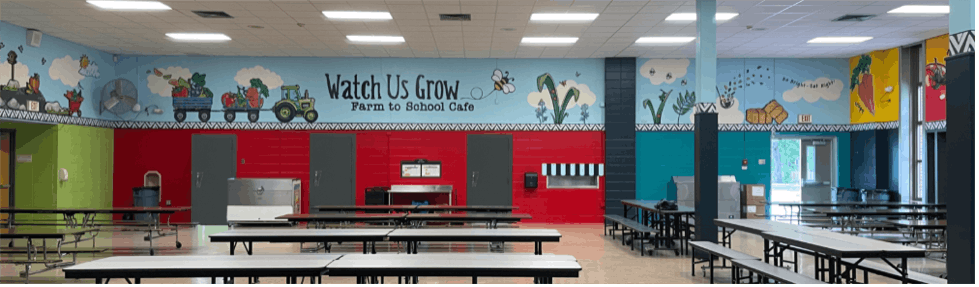
A happy cafeteria is not about being fancy—it is about being intentional. Walk into a food hall or a restaurant you like and notice what is happening: the colors set a mood, the layout makes sense without anyone explaining it, there are things to look at, and the whole space has a personality. Schools can do the exact same thing.
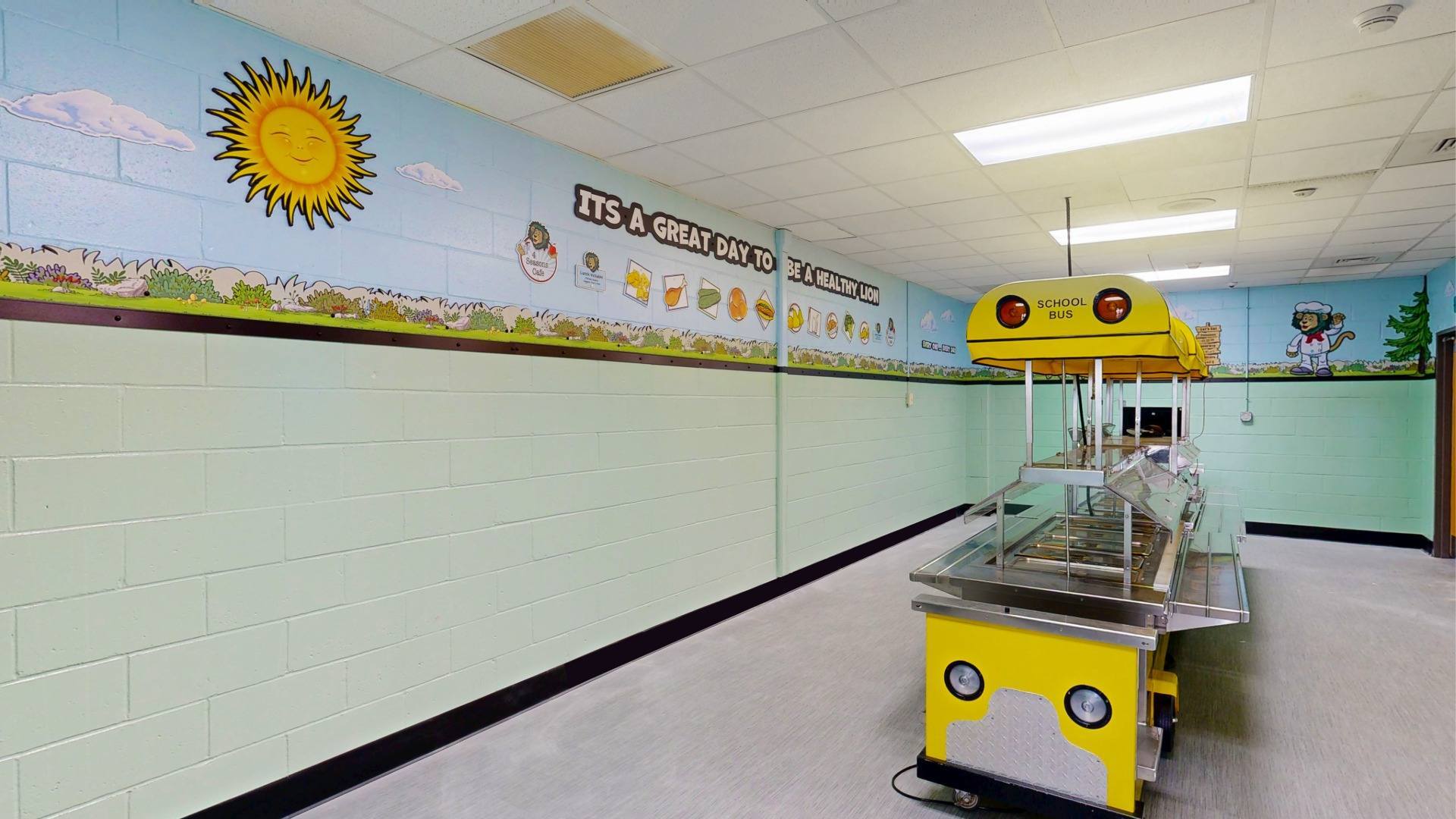
- Energy-Bringing Colors: Introducing color that brings energy instead of putting people to sleep.
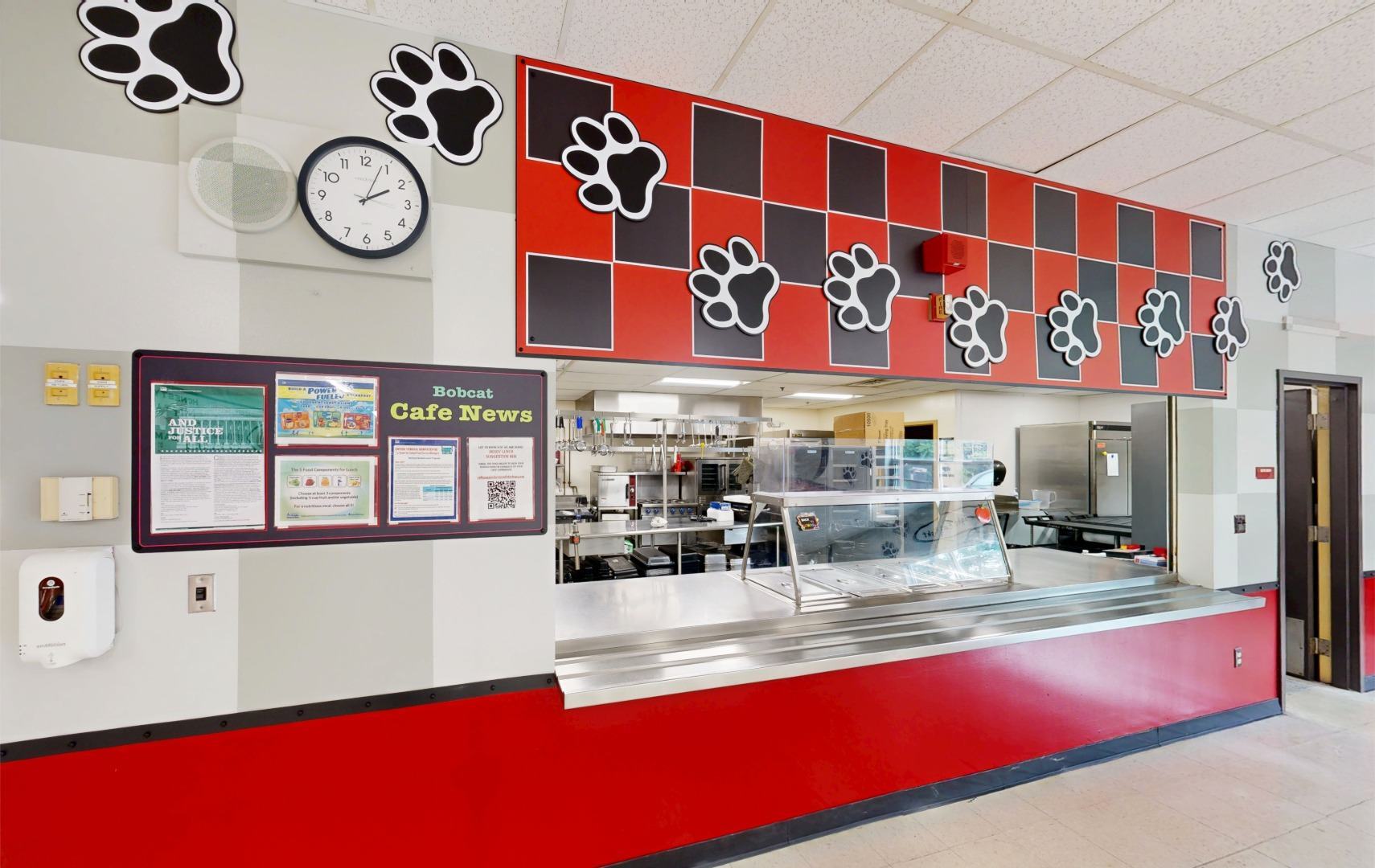
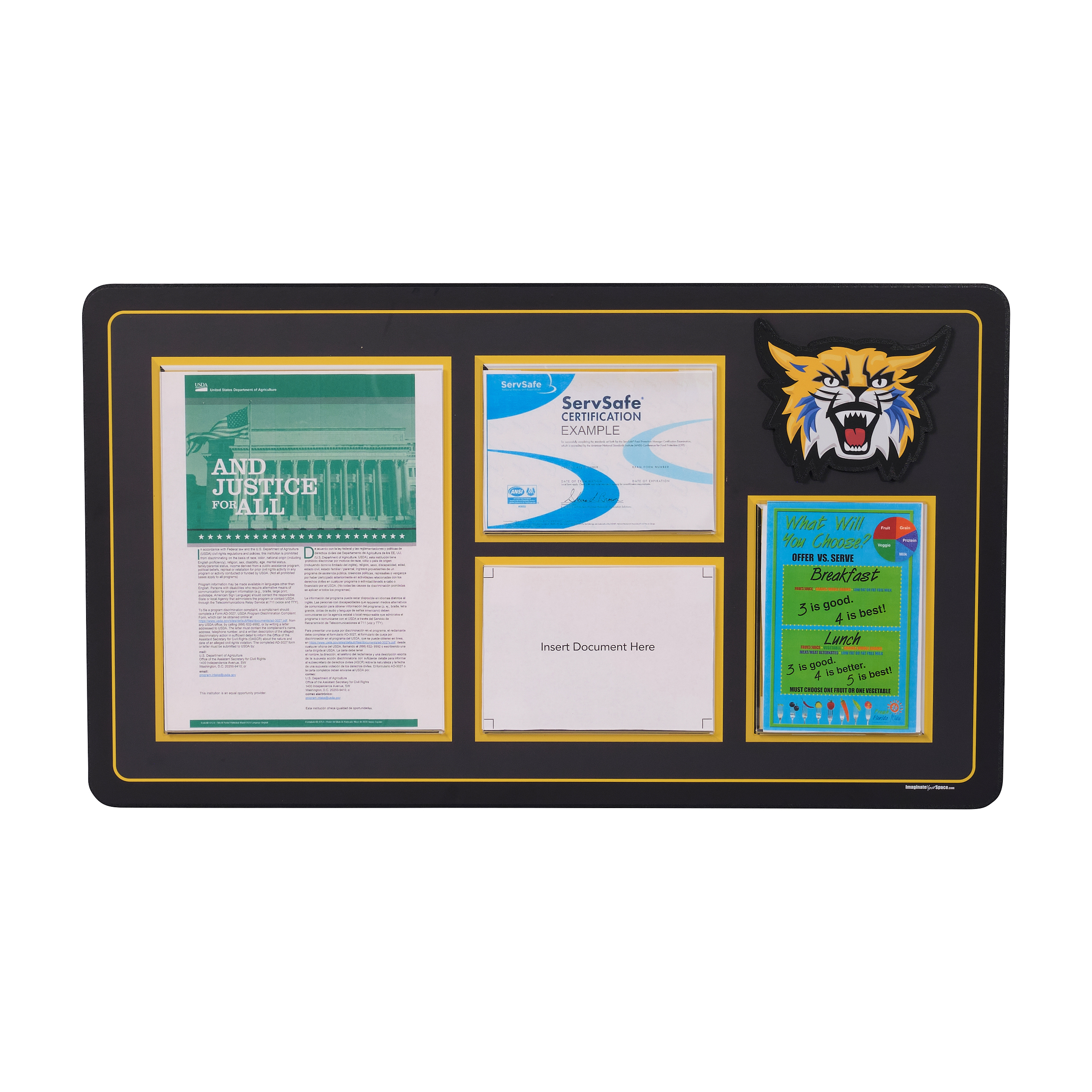
- Identity-Driven Graphics: Adding graphics that give the room character and connect it directly to the school's identity.
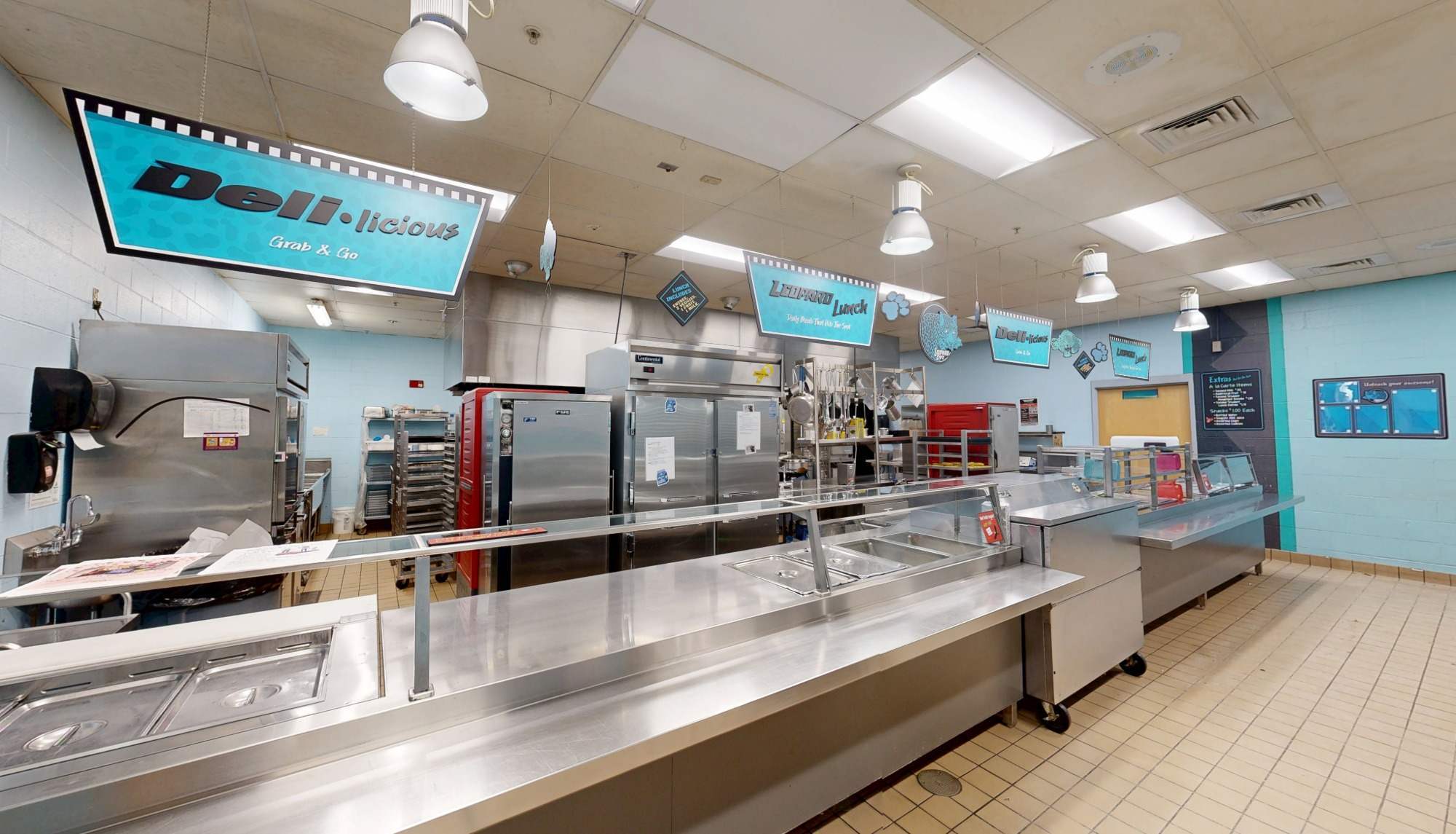
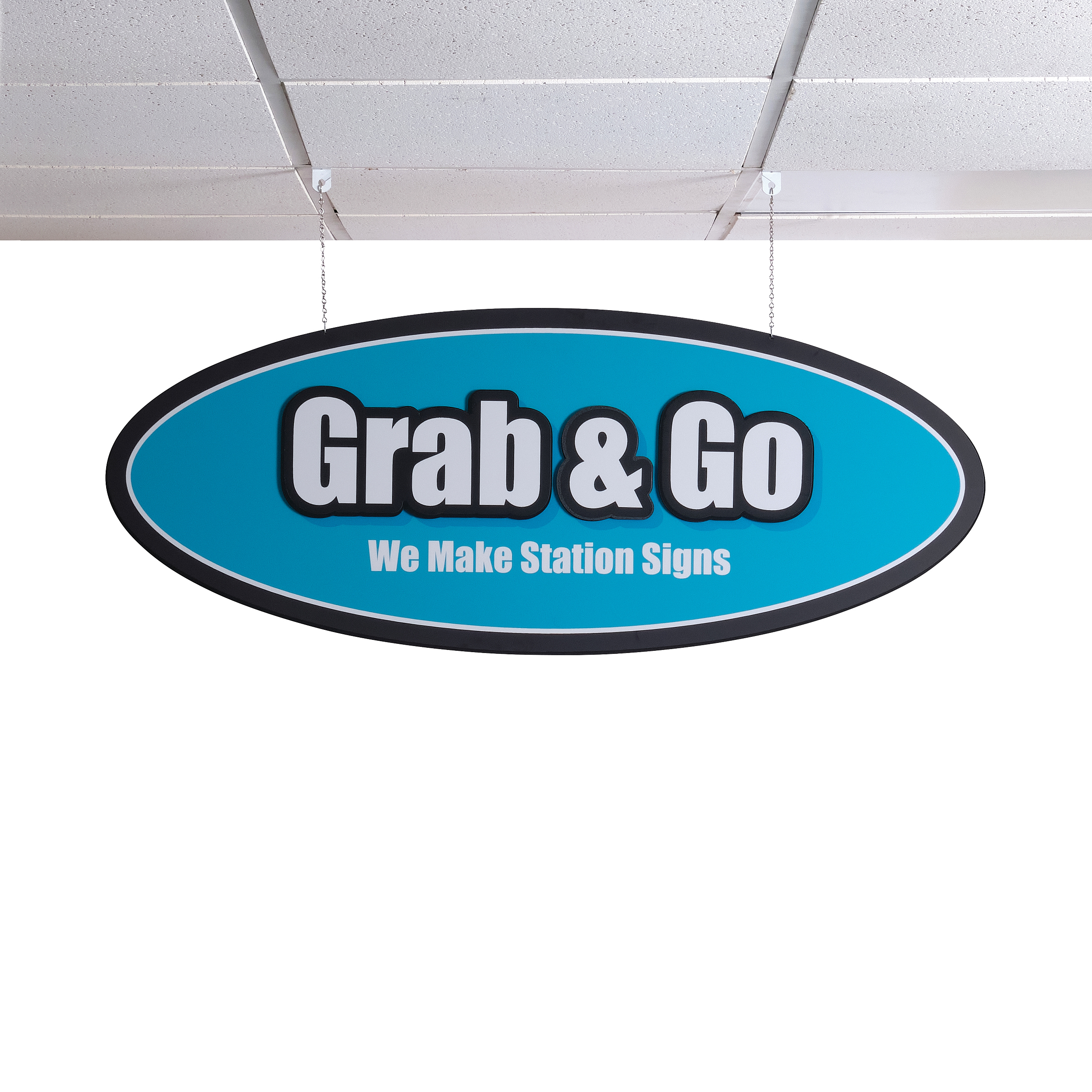
- Functional Signage: Installing signage that actually helps students figure out where things are without hesitation.
- Sense of Ownership: Building a branded environment that says this room belongs to us.
When those elements come together, students walk in and something clicks. The room has a vibe. It feels like someone cared, and that shifts everything—from how loud the room gets to how many kids choose to eat.
Designing Intentionally for Traffic and Flow
A major cause of cafeteria friction is poor spatial flow that leads to long, frustrating lines. Designing intuitive pathways keeps the space moving efficiently and reduces student anxiety during busy serving periods.
- Clear Station Navigation: Prominent signage above food stations eliminates line hesitation and keeps queues moving smoothly.
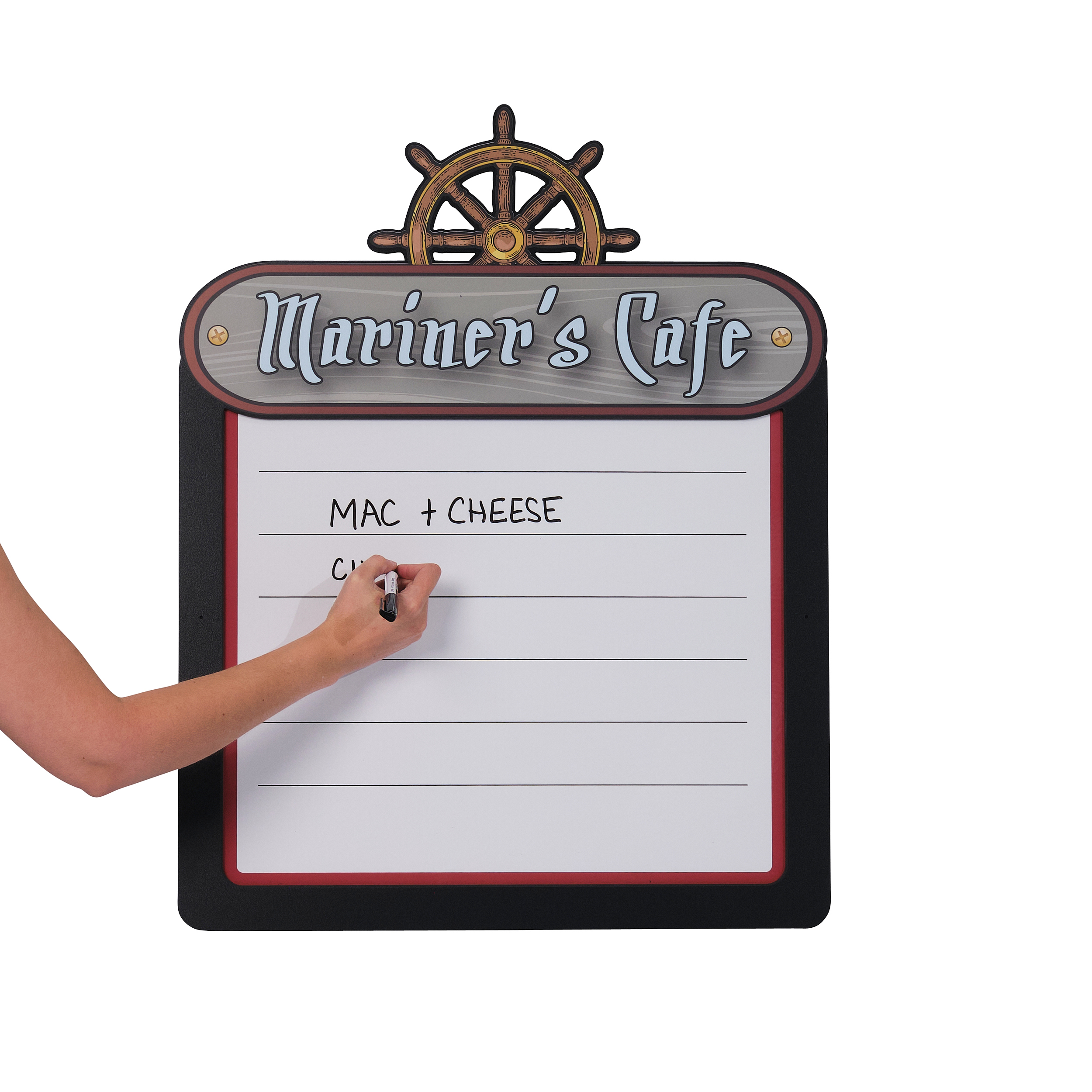
- Separating Decision Points: Positioning menus and options prior to entering the queue reduces register bottlenecks.
- Express & Grab-and-Go Paths: Creating dedicated channels for quick-pick items helps time-conscious students get their meals without delay.
- Organized Entry & Exit: Establishing explicit visual start and end points prevents line crowding near entrances.
This Is Not Just a "Nice to Have"
The schools that have figured this out are seeing results they can actually measure. Upgrading the dining hall is not a cosmetic luxury; it delivers a direct, positive return on overall school culture and operations.
- Better Participation: Driving higher daily meal participation and increasing revenue for the school nutrition program.
- Calmer Lunches: Naturally reducing ambient noise levels and creating a peaceful dining environment.
- Fewer Behavior Referrals: Minimizing friction points in lines and seating to significantly reduce discipline issues during meal periods.
- Improved Staff Experience: Supporting staff who no longer dread the midday shift because the space works with them instead of against them.
None of it required knocking down a wall or adding square footage. It was the visual layer—what students see and feel when they walk in—that changed everything.
Treating the Largest Shared Space with Dignity
The cafeteria is the biggest shared space in your building, and it deserves to be treated like it. When a school invests in creating an inviting dining room, it communicates a clear statement of care to every child who enters.
- Communicating Respect: A thoughtfully designed room shows students that their daily comfort and experience matter.
- Eliminating Stigma: Unified, attractive environments normalize the space so every student feels equal regardless of meal status.
- Strengthening Campus Identity: Integrating school colors and mascots builds pride across the entire student body.
- Sustained Cultural Impact: Elevating the space creates a positive daily atmosphere 180 days a year.
“A happy cafeteria is not about being fancy. It is about being intentional. The cafeteria is the biggest shared space in your building—it deserves to be treated like it.”
Frequently Asked Questions
Why do school cafeterias often get neglected compared to libraries or gyms?
Cafeterias have traditionally been viewed as purely functional "utility" rooms meant strictly for feeding large volumes of students quickly, leading administrators to prioritize academic and athletic spaces for aesthetic updates.
Do you need to knock down walls or expand square footage to transform a cafeteria?
No. Most spatial transformations rely entirely on an applied visual layer—such as environmental wall graphics, custom station signage, wayfinding markers, and school branding—without needing structural building changes.
How does environmental design directly reduce noise levels in a loud cafeteria?
When a cafeteria feels chaotic and institutional, students naturally shout to be heard over the room. Adding intentional visual structure, warm colors, and clear queue organization creates a calmer atmosphere that naturally lowers noise levels.
How does a redesigned cafeteria improve staff experience?
A well-organized, visually appealing space reduces student confusion, eliminates queue bottlenecks, and creates an inviting work environment, significantly reducing staff stress and fatigue during meal periods.
What are the first visual elements a school should upgrade in a cafeteria?
The highest-impact starting points are adding prominent school branding/mascot graphics, installing eye-level signage over food serving stations, and replacing bare walls with colorful environmental wraps.