
Little kids, big challenges, and the room that can help
A kindergartner walks into the cafeteria on the third day of school. She has been in a school building for approximately fourteen hours of her life. The room is big. It is loud. There are more people in it than she has ever seen eating at the same time. Her class has assigned seating, so she knows which table is hers, but everything between the door and that table is a mystery. She does not know what the food options are. She is not sure what she is supposed to do with the tray.
She is five.
Now imagine the lunch staff is trying to get her and 200 other students through the serving line, seated, fed, and back to their classrooms in 25 minutes. That is elementary lunch.
Why Elementary Lunch Is Not the Same as Middle or High School
Older students know the routine. They might not love the cafeteria, but they know how it works. Elementary lunch is different. Younger students are still learning everything. They need more time to choose. More time to carry a tray. More time to open a milk carton. They are more sensitive to noise and overwhelm. And they have the shortest lunch windows in the building.
That is a tough combination. Young students who need the most time and support are operating in the tightest window with the least margin for error.
The Classroom Figured This Out Already
Every elementary classroom in the country uses visual cues to organize the environment. Color-coded bins. Picture labels. Visual schedules. Teachers know that young students navigate their world through images, not text. And yet elementary lunch environments—often the most complex part of the school day—rarely use this approach.
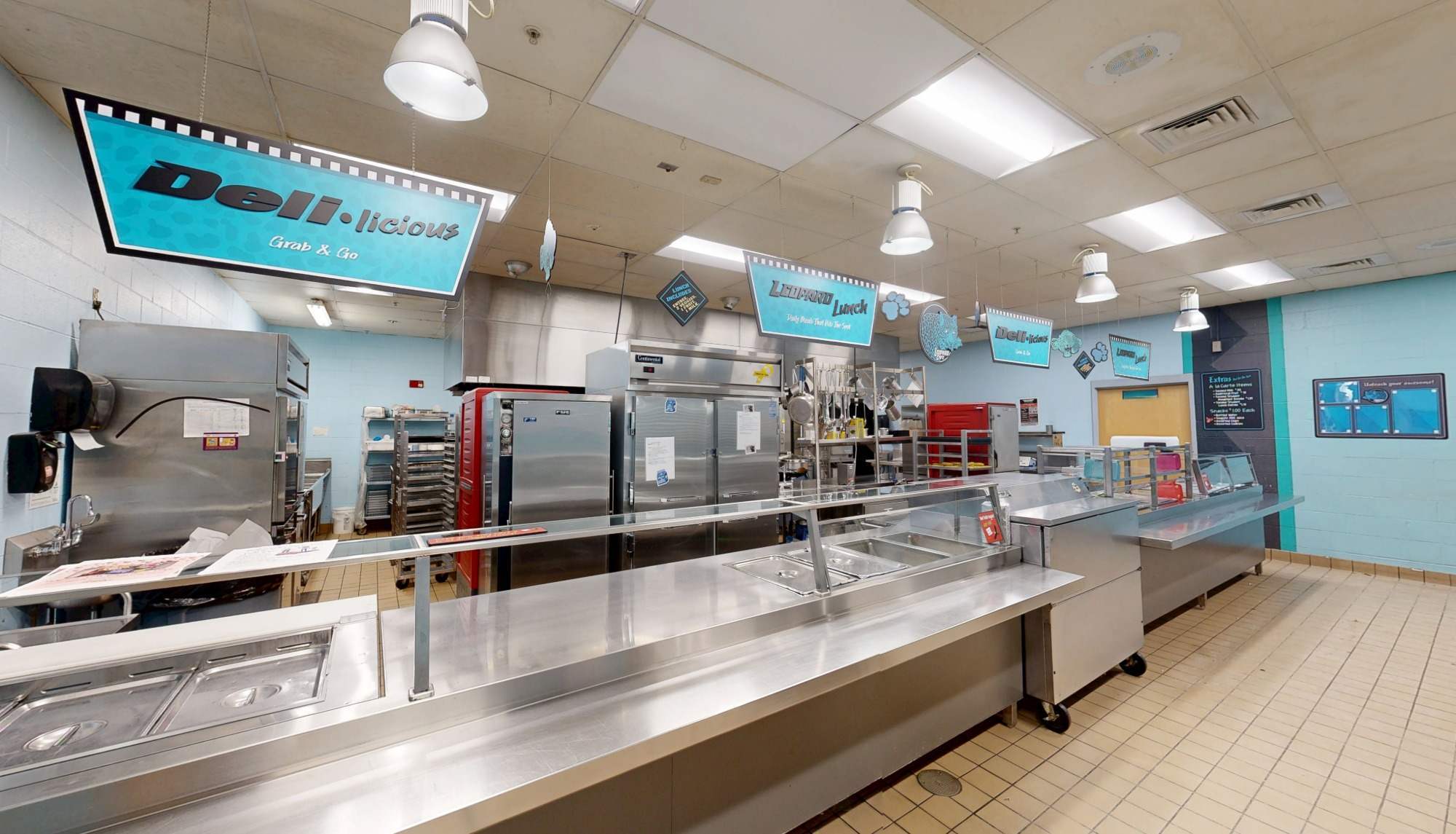
When you put visual wayfinding into an elementary cafeteria, the difference is immediate. A big, bright apple graphic above the fruit station means a first grader does not need to ask what is there. Floor graphics or wall arrows show students which way the line moves. Themed zones at each station create landmarks that even pre-readers can recognize and follow.
Calm Is Not the Opposite of Colorful
Parents and teachers sometimes worry that adding bright graphics to a cafeteria will ramp kids up. The opposite tends to happen. In a bare room, young students create their own stimulation. They fidget. They yell. They bounce off each other. During elementary lunch, when the room provides visual engagement and a sense of order, that restless energy has somewhere to land. The space itself becomes a calming presence.
Every school that has done this reports the same thing. The room is not suddenly silent. It is elementary lunch. There will be noise. But the baseline drops. The peaks are lower. Recovery is faster.
Faster Elementary Lunch Lines Mean More Time to Eat
This is the practical payoff. When students can read the room visually and navigate the line without adult direction at every step, the whole elementary lunch process speeds up. A few minutes saved per rotation across three or four lunch groups means kids get more time to actually sit and eat. That leads to better nutrition, less food waste, and fewer behavior issues in the afternoon.
Built for the Smallest Students
Elementary cafeterias ask the youngest, least experienced students in the building to navigate the most complex part of the day: elementary lunch. The room should be helping them. In most schools, it is not. That is a design problem with a design solution.