



Sean Barton
Chief Operating Officer
Questions about your own room?
One short call to walk through the room, the goals, and what is possible. No pressure, no obligation.
Overview
-
The NSLP reimburses per qualifying meal served, roughly $4.09 free, $3.69 reduced-price, and $0.40 paid, with slight variation by state.
-
An 800-student school serving 340 of a possible 400 free lunches gives up about $245 a day, more than $44,000 across a 180-day year.
-
The students who skip lunch are still in the building. They are present and eligible, and they are choosing not to eat in the room they were given.
-
Menus get reviewed every year. Line speed, station signage, and how the room reads are the variables most schools have never adjusted.
-
A visual transformation is a one-time cost set against reimbursement revenue that recurs every serving day.
What the NSLP actually pays for
The National School Lunch Program does not reimburse enrollment. It reimburses meals that are served and claimed. Current rates run about $4.09 for a free meal, $3.69 for a reduced-price meal, and $0.40 for a paid meal, with slight variation by state. Every tray that clears the line is real funding for the nutrition program. Every tray that does not is money the district was already eligible for and did not collect.
What the gap looks like at one school
Take a school of 800 students where 60% qualify for free meals. On paper that is about 400 free lunches a day. If 340 are actually served, 60 eligible meals go unclaimed every day. At the free rate that is roughly $245 a day. Across a 180-day school year, that one school leaves more than $44,000 on the table. Multiply it across a district and the number moves into six figures without a single line item changing.
“The program sets what a meal is worth. The room decides how many of them you serve.”
Where the missing meals go
Those 60 students have not left the building. They are present, eligible, and choosing something else: food from home, a skipped lunch, or off campus where that is allowed. When directors ask students directly, the answers are rarely about the recipe. They are about the wait, the noise, the crowding, and not knowing what to take. The menu gets reviewed every year. The room usually never has been.
What the room is doing to participation
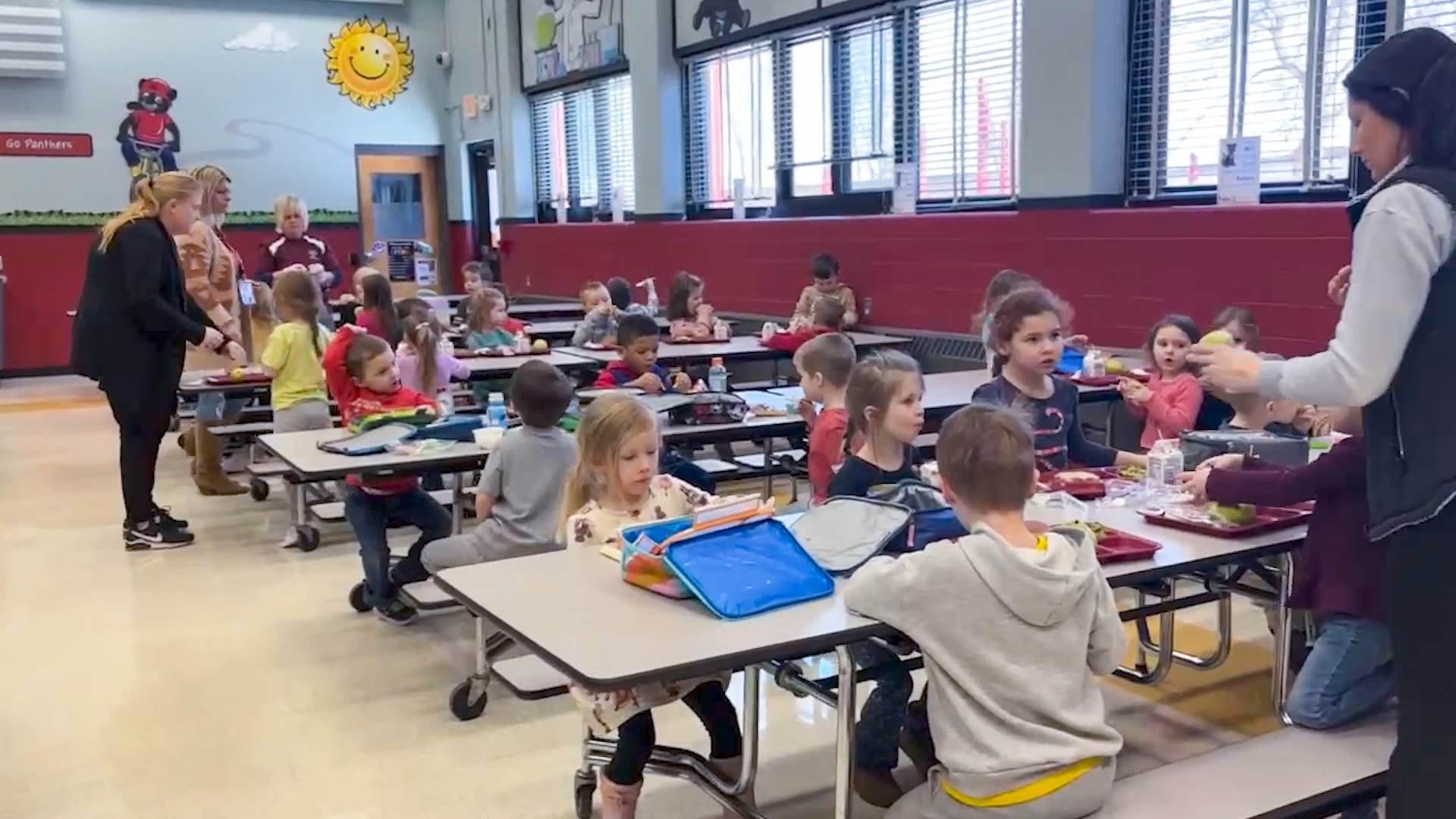
Students avoid spaces that feel stressful, confusing, or institutional, and a cafeteria can be all three without anyone intending it. A serving line that reads as a back-of-house operation, stations with no clear labels, and a room with no identity each add friction at the exact moment a student decides whether to get in line. None of that appears in a menu review. All of it appears in the participation count.
Five things you can change without touching the menu
None of these require a new recipe, new equipment, or a renovation.
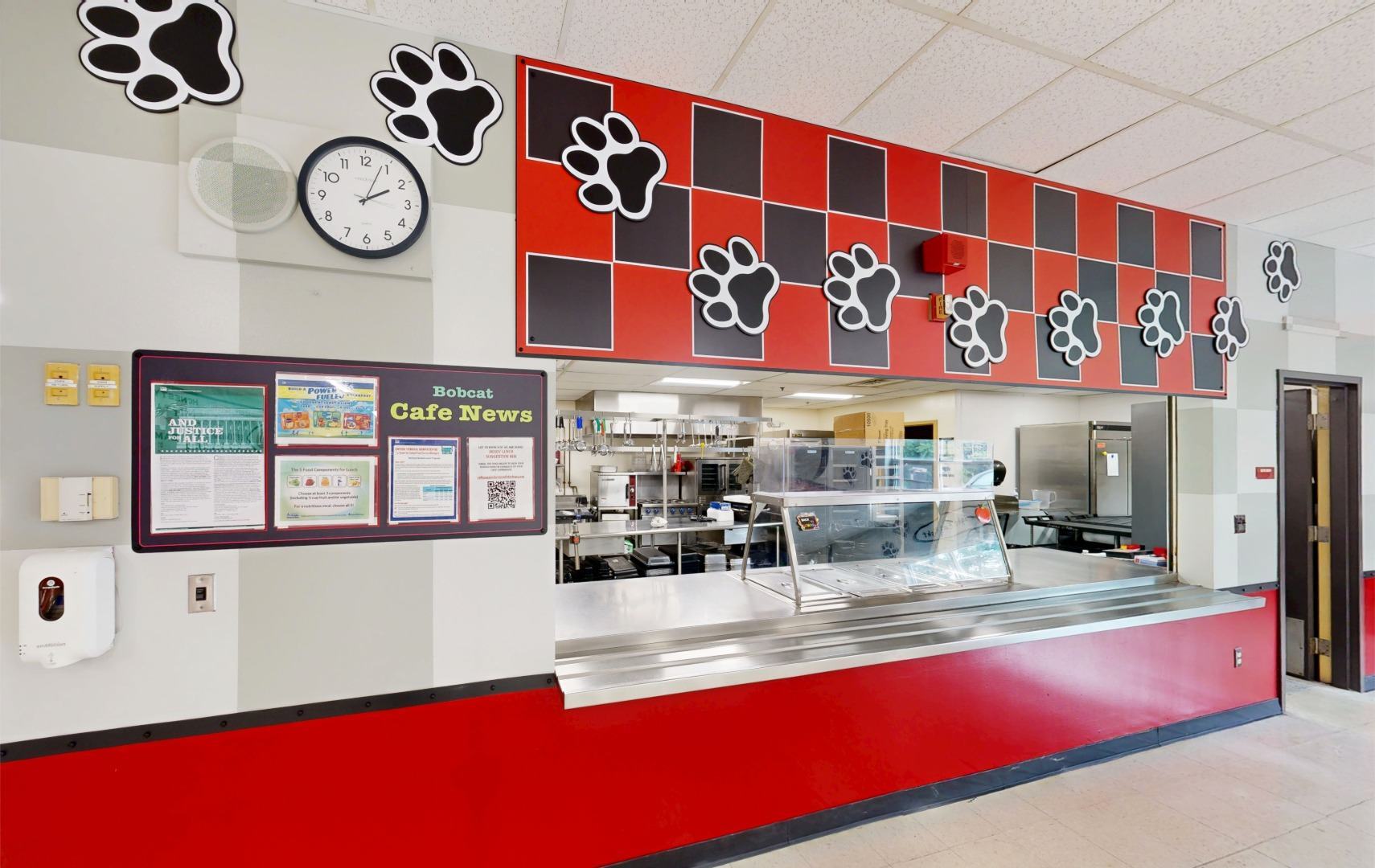
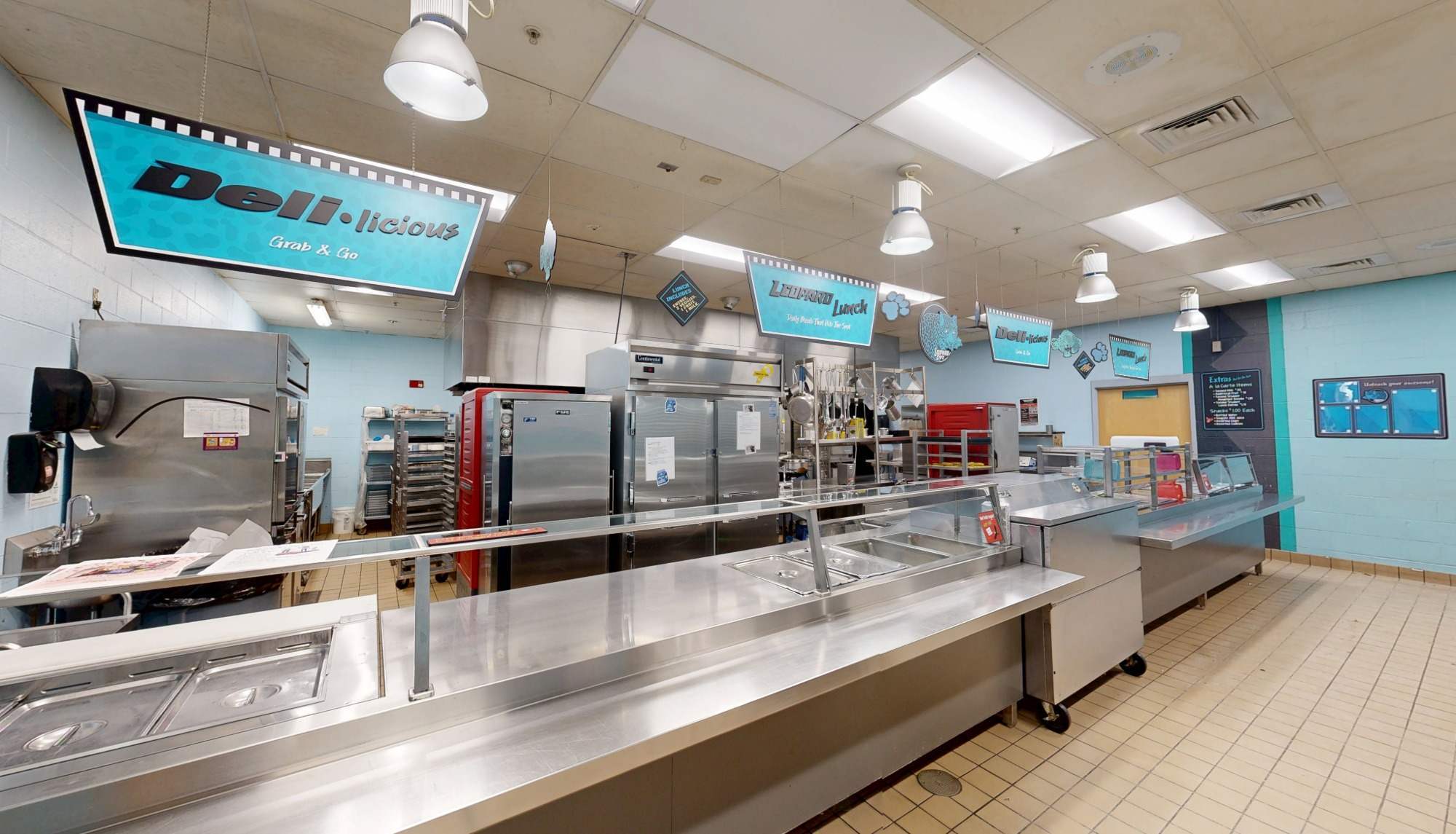
Make the serving area read like a storefront. Branded graphics and a finished front-of-house look invite students in, instead of signaling a kitchen they happen to be lining up outside of.
Label every station so the choice is obvious. Component icons and food photography at each station cut hesitation, which shortens the line and gives the time back to eating.
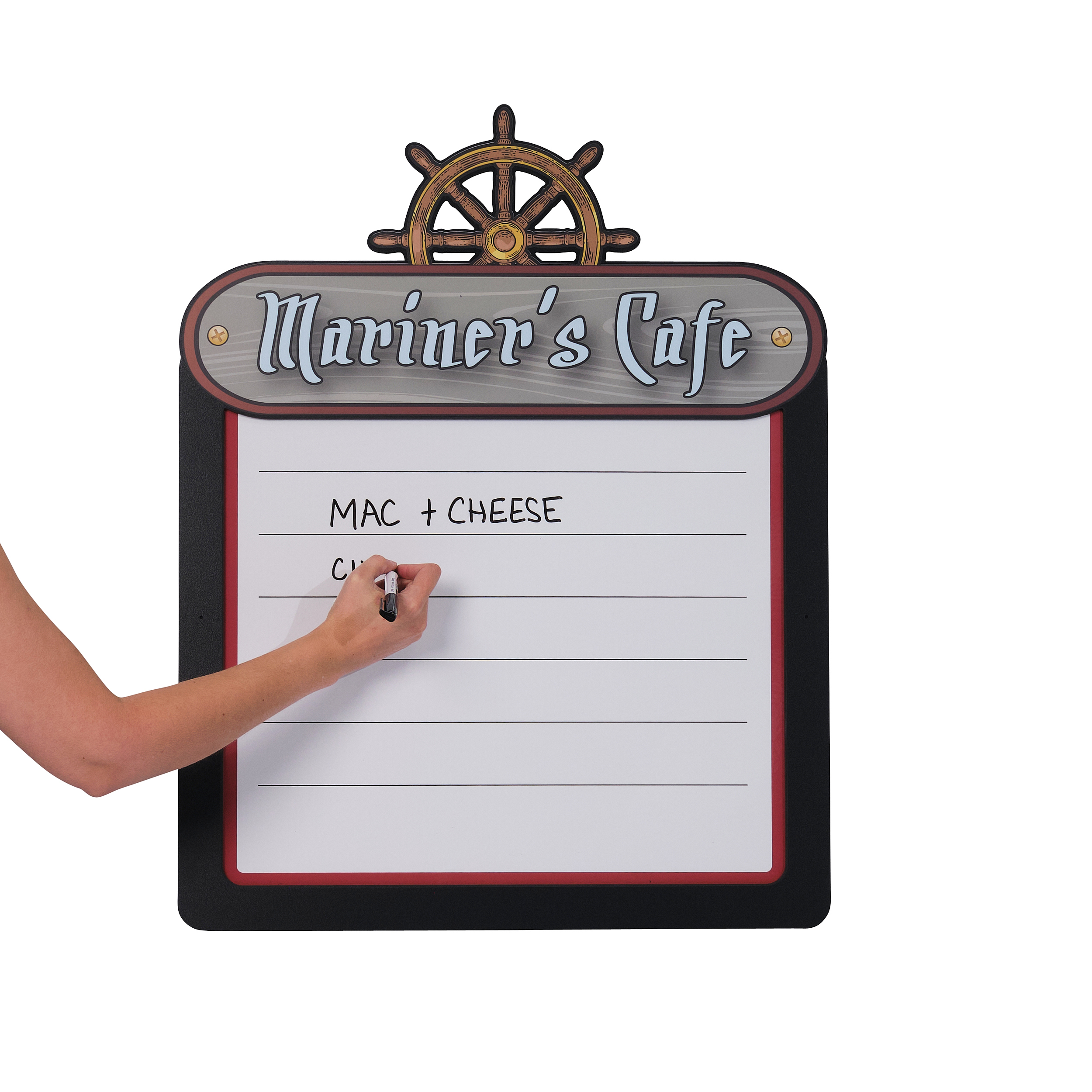
Make the menu legible from the back of the queue. A student deciding at the register slows everyone behind them. A student who decided twenty feet back does not.
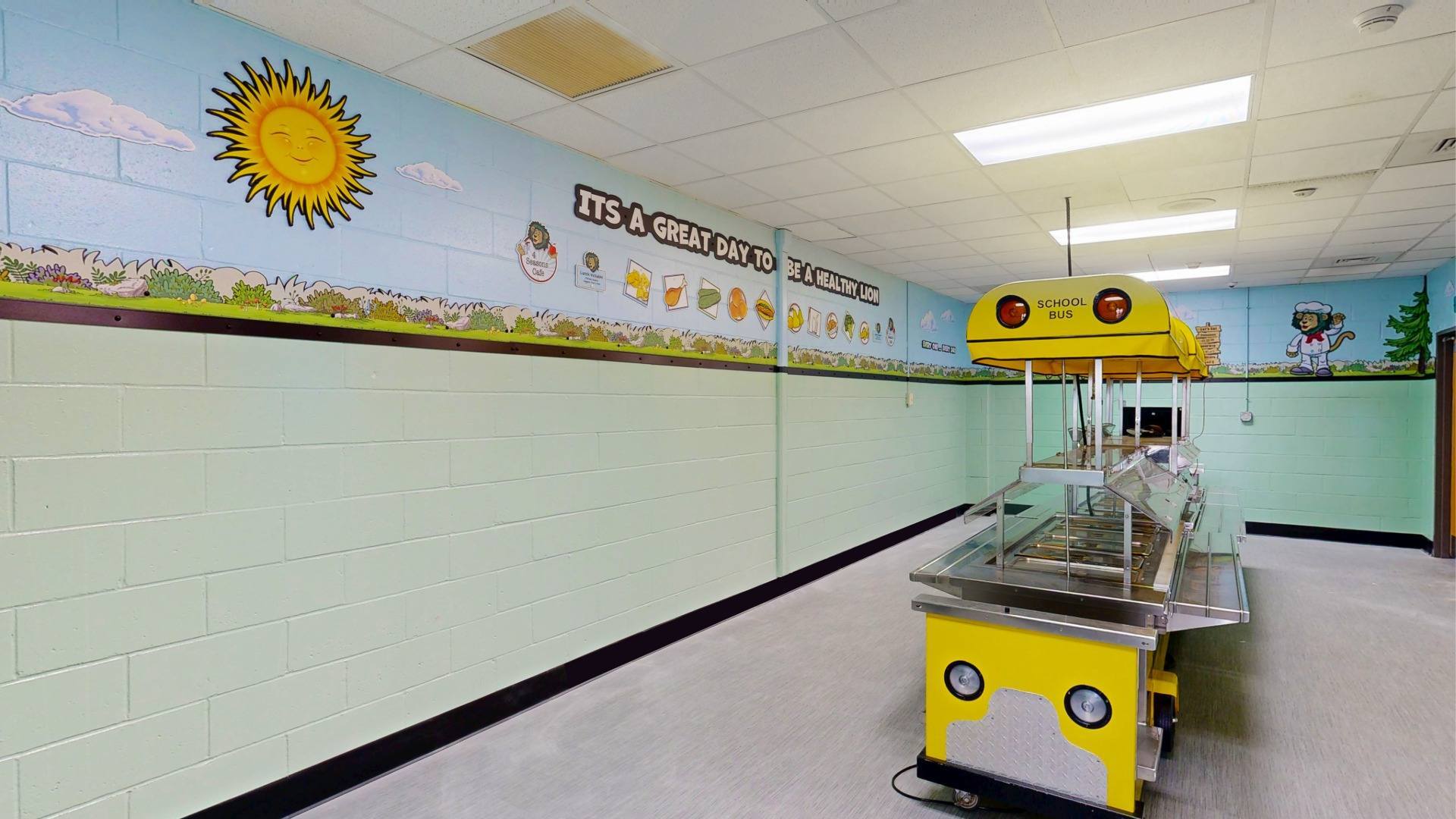
Give the room an identity that belongs to the school. Mascot graphics and a cohesive palette turn a leftover space into one students associate with the rest of the building.
Design for the age in front of you. Elementary needs pictures and short phrases. High school needs clean and direct. Same information, pitched differently.
Where to start
Start where the decision actually happens: the serving line, the signage at each station, and the first ten feet of the room. It requires looking at the cafeteria the way a student does, then designing for the choice they make before they reach the register. If flow and signage have never been reviewed with participation in mind, that is the fastest place to find meals you are already funded to serve.
FAQ
What is the NSLP program?
The National School Lunch Program is the federal program that reimburses schools for qualifying meals served to students. Reimbursement follows meals served, not enrollment or eligibility counts.
How much does the NSLP reimburse per meal?
Roughly $4.09 for a free meal, $3.69 for a reduced-price meal, and $0.40 for a paid meal, with slight variation by state and small annual adjustments.
How does cafeteria design affect NSLP reimbursement?
Reimbursement follows participation. Line speed, station signage, and how the room reads all influence whether an eligible student gets in line, so design decisions change the number of claimable meals.
Is a cafeteria redesign worth it for a nutrition program?
It is a one-time cost measured against revenue that recurs every serving day. Even a small participation gain compounds across 180 days and across every school in a district.