



Sean Barton
Chief Operating Officer
Questions about your own room?
One short call to walk through the room, the goals, and what is possible. No pressure, no obligation.
Overview
-
Poorly planned cafeteria interiors create immediate confusion, causing students to crowd entrances and cut in line because queue start points are unclear.
-
Unlabeled food stations slow down line speed, causing waiting students to grow restless and engage in behavioral conflicts.
-
Hard institutional surfaces amplify ambient noise, forcing students to shout to hear one another and escalating room volume.
-
Redesigning the cafeteria interior removes spatial friction—speeding up lines, clarifying tray returns, and enabling monitors to manage the room instead of constantly putting out fires.
A Typical Lunch Period Where Behavior Is a Constant Issue
The first group hits the cafeteria right around 10:30. It is early, but that is how it works when running four lunch rotations. There is no signage telling them where to line up, so thirty kids cluster near the entrance. Poorly planned cafeteria interiors create confusion right away, forcing a monitor to step in and direct traffic. A couple of students cut in because nobody can tell where the line actually starts, creating conflict. The monitor handles the argument, but now she is occupied for two full minutes while the line backs up further.
Changes to Staff or Schedule
Faster Serving Line Movement
Room Noise Levels
Discipline Disruptions
“When a cafeteria lacks clear spatial direction, student confusion turns into immediate behavioral friction before the first tray is even picked up.”
How Unclear Layouts Cause Chaos to Compound
Five minutes into the period, students reach the serving area. The stations are not clearly labeled. In many outdated cafeteria interiors, kids slow down to figure out what is what—some ask the server, while others just grab whatever is closest.
- Queue Bottlenecks: The line stalls as students hesitate at unlabeled counters.
- Restlessness & Friction: Students waiting in the back get restless, leading to pushing or shoving matches that require monitor intervention.
- Noise Escalation: Hard floors, cinderblock walls, and laminate tables amplify sound. A group at one table shouts to be heard, causing neighboring tables to speak louder until a teacher has to blow a whistle.
- Messy Transitions: By the end of the rotation, students do not know where to put trays, leaving trash on tables while the next group lines up outside.
The Same Cafeteria with a Redesigned Interior
Picture the exact same cafeteria with a redesigned interior. None of the people changed—same students, same staff, same schedule. But the physical room functions completely differently.
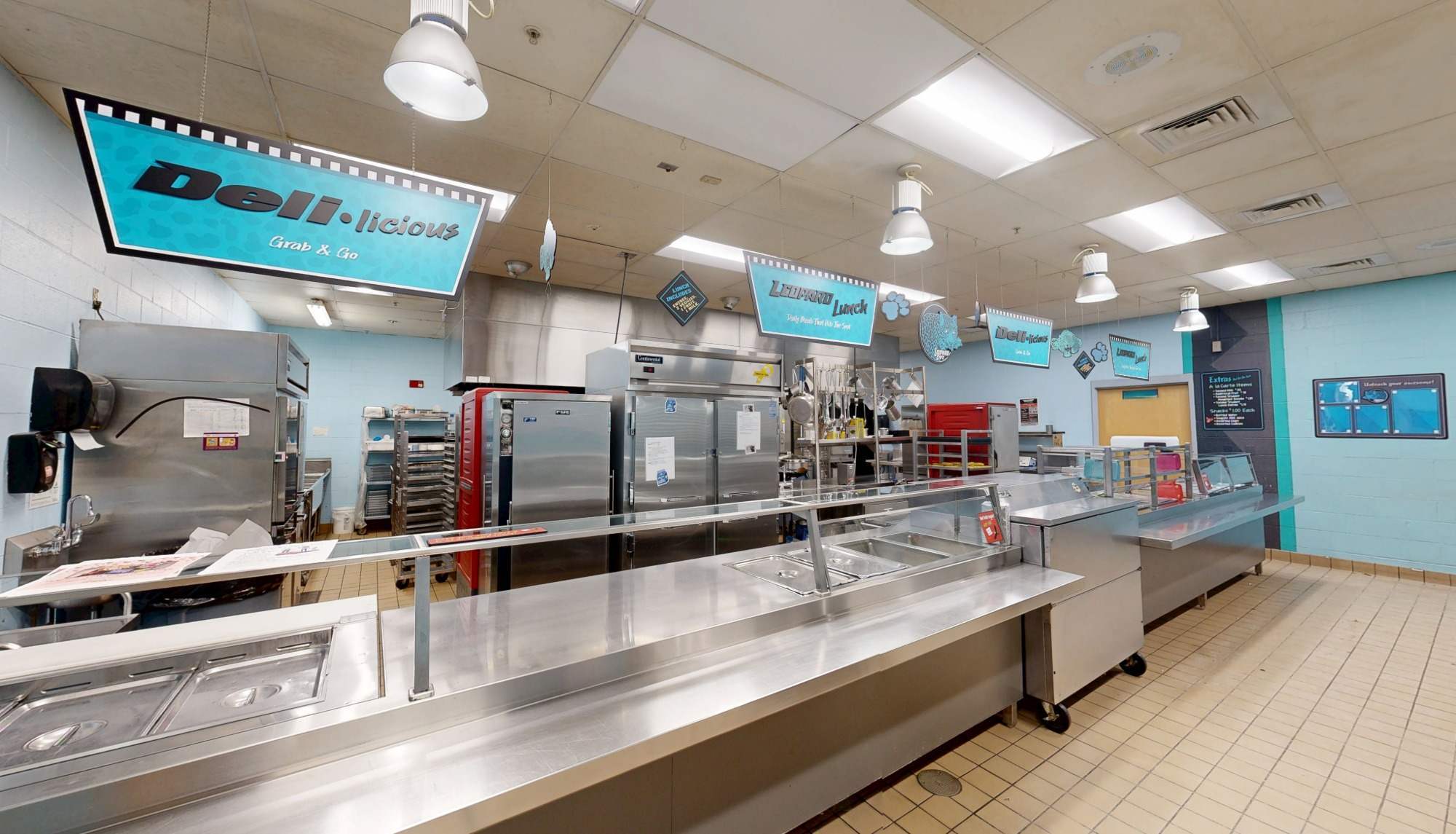
- Clear Queue Entry: A clear visual entry point with signs and graphics shows students exactly where the line starts.
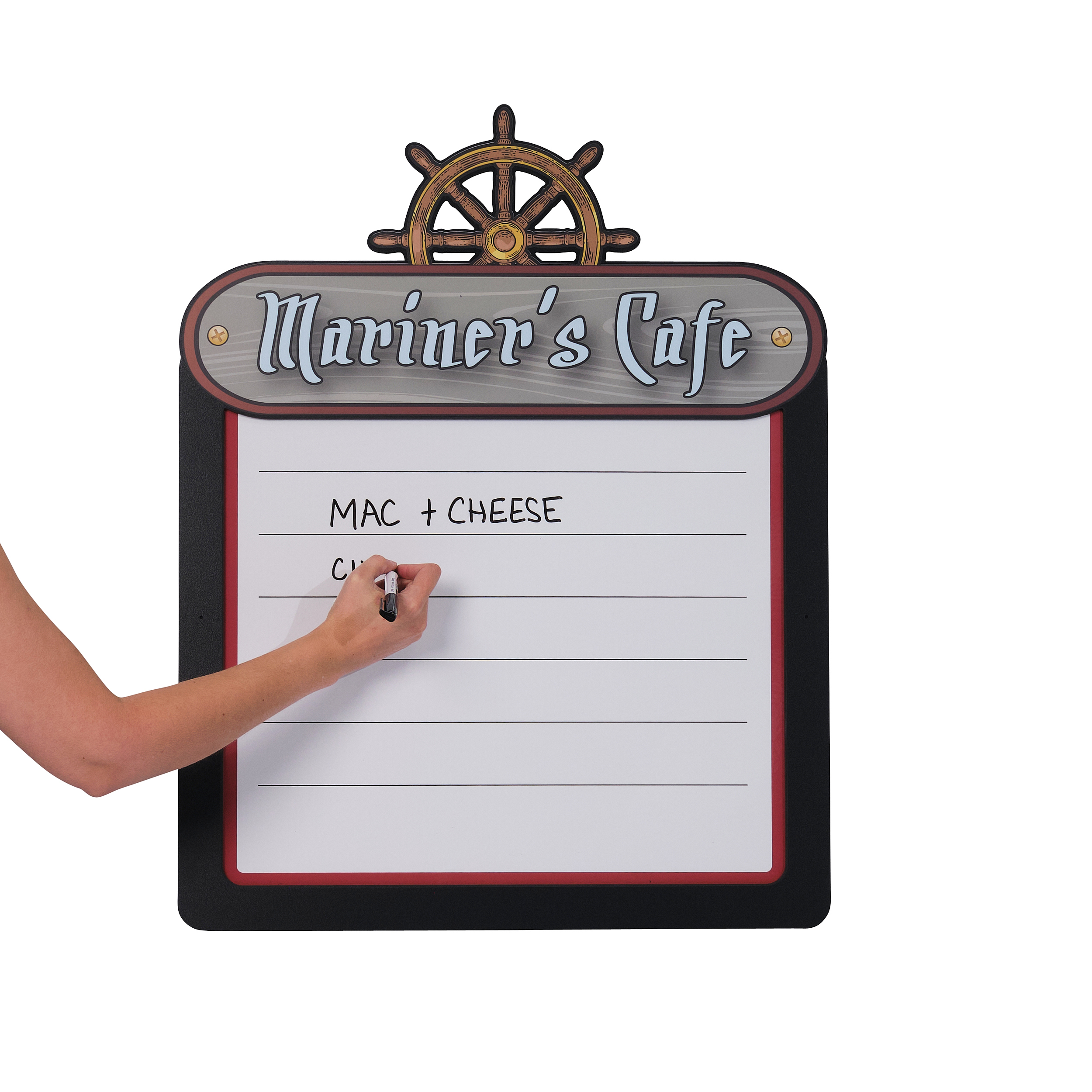
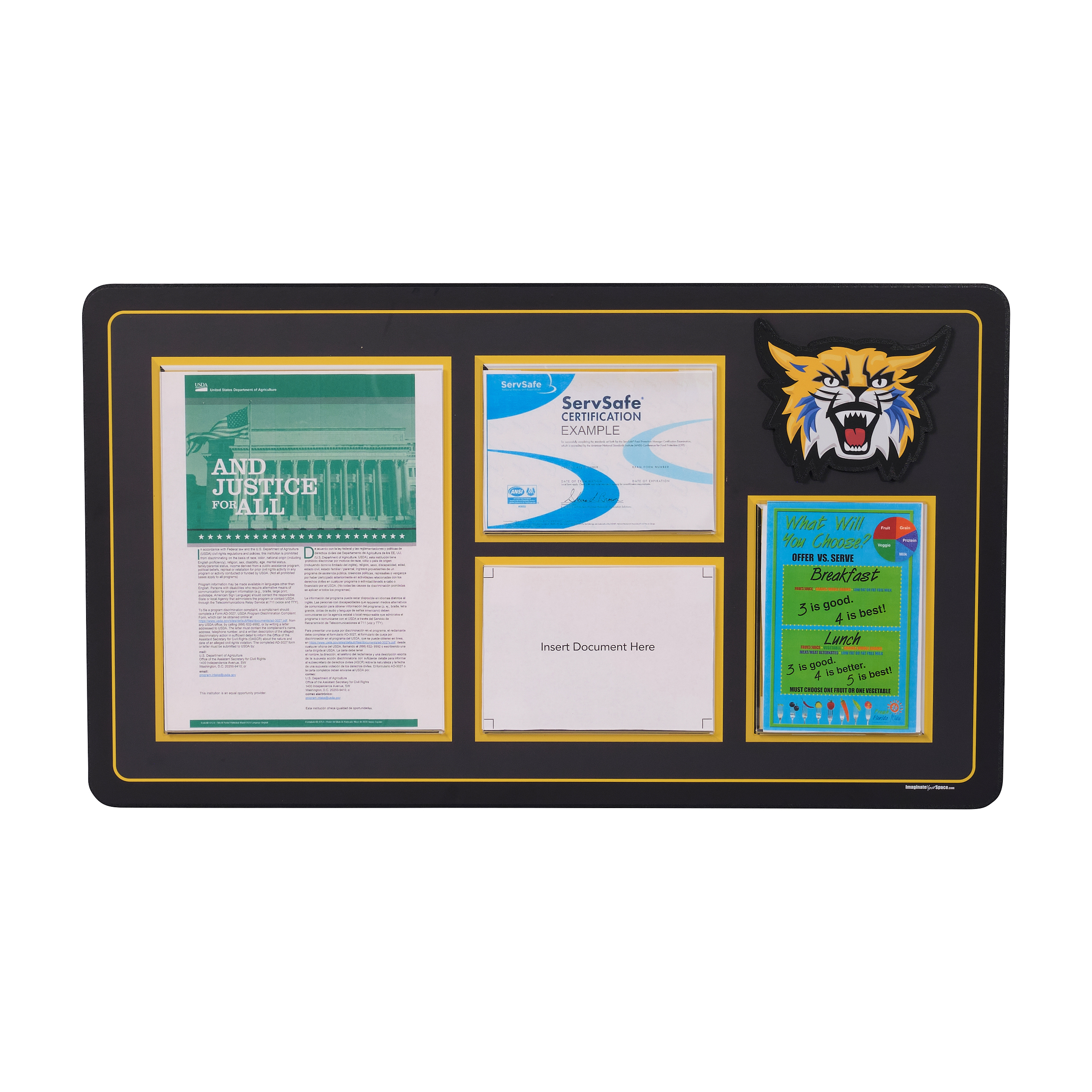
- Entrance Menu Display: A lunch menu board near the door tells everyone what is being served so students commit to the line with confidence instead of guessing.
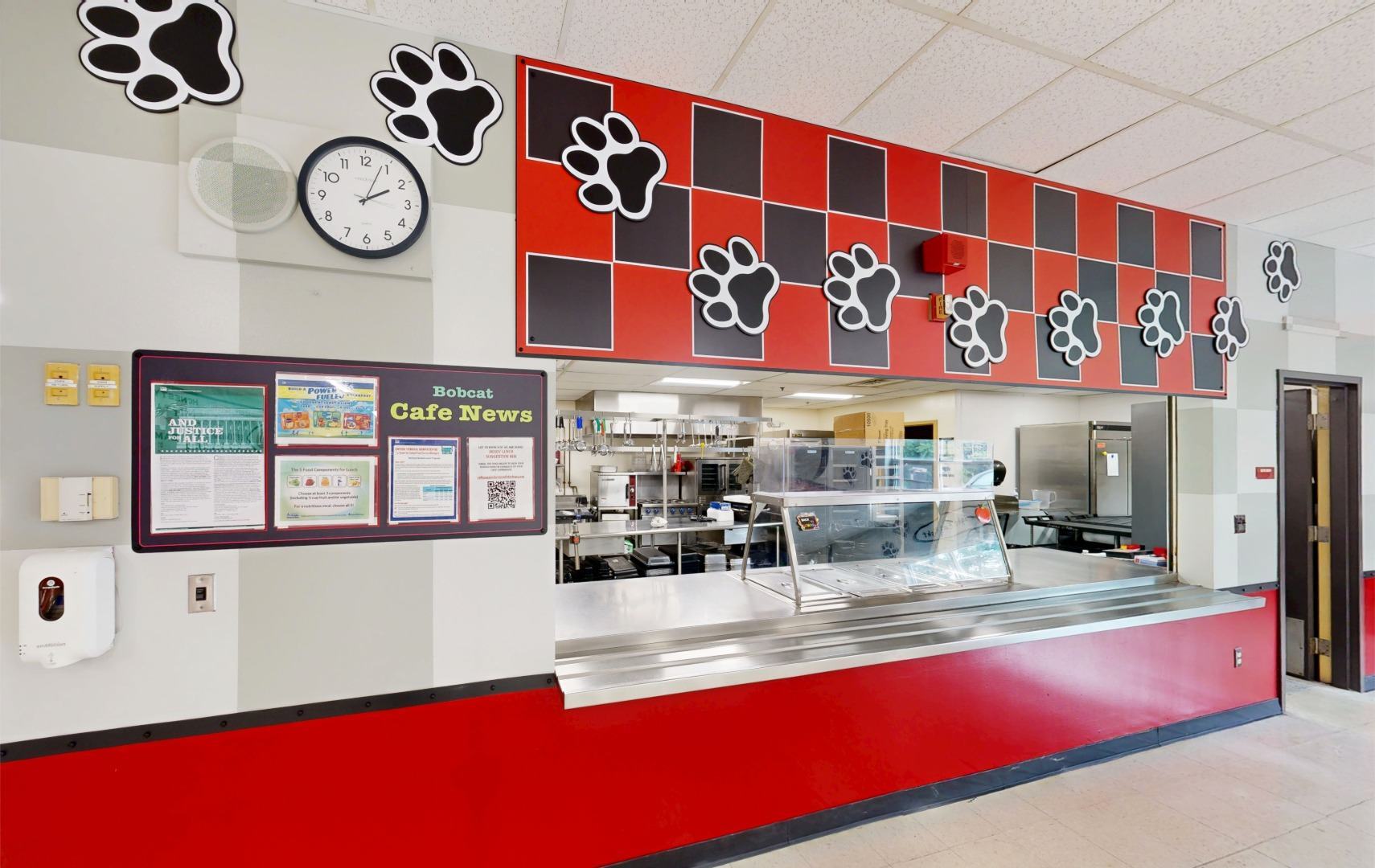
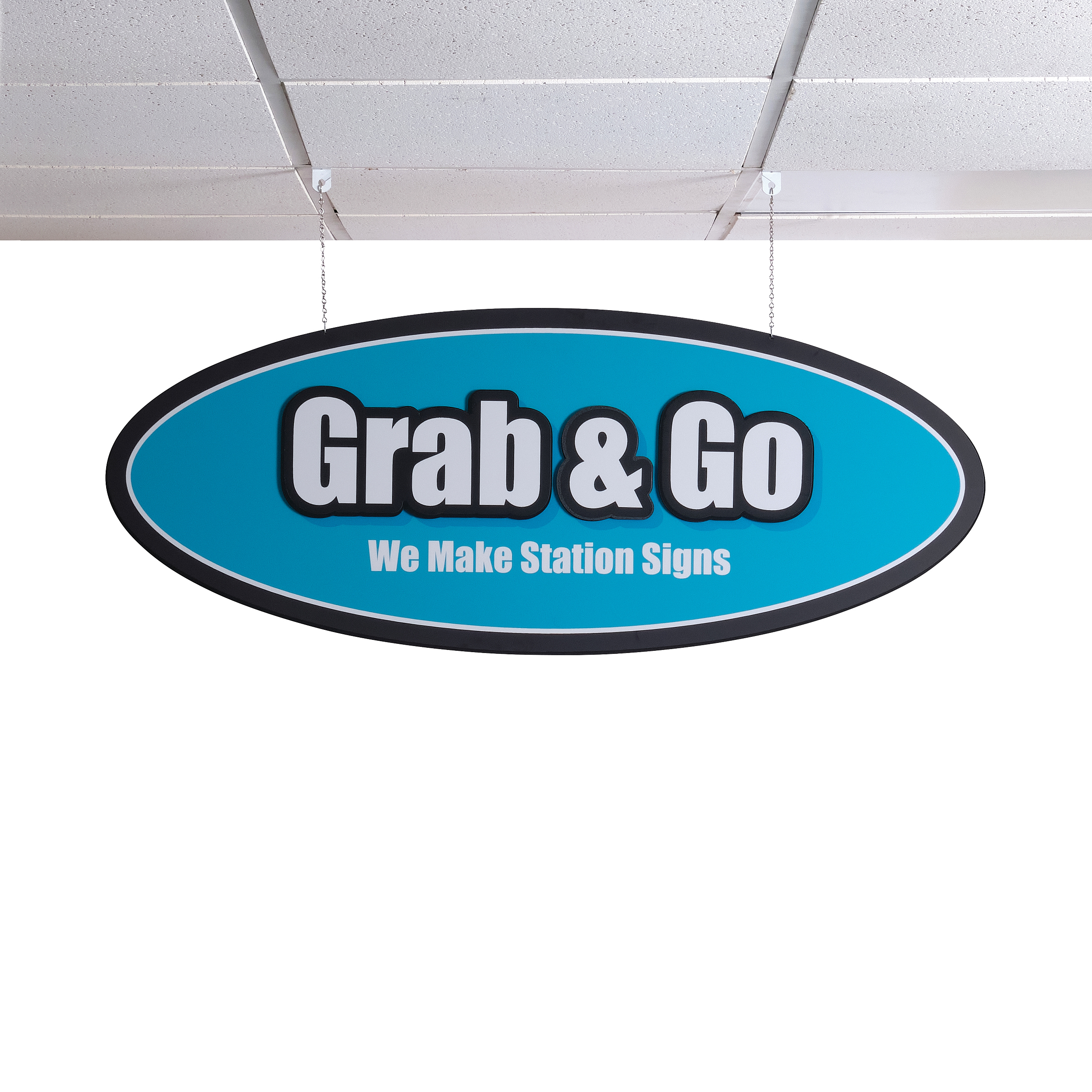
- Labeled Stations: Food stations are clearly marked with signs showing what is served at each spot.
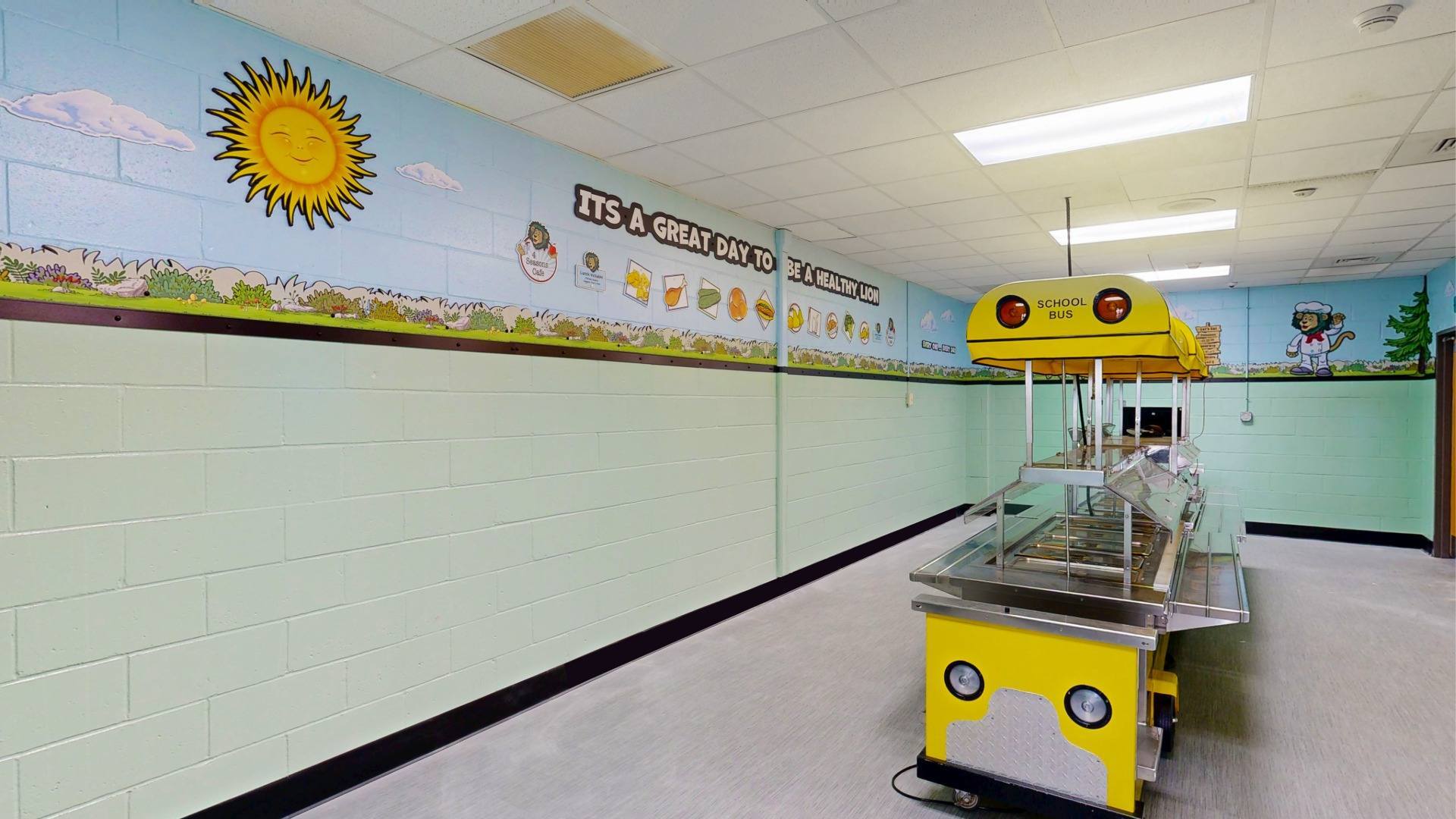
- Warm Atmosphere: School branding, murals, and a warm, energetic color palette replace flat gray cinderblock.
- Cleaner Transitions: Marked tray return areas keep disposal organized, and staff manage the room rather than putting out fires.
Environmental Wayfinding and Traffic Control
When wayfinding graphics and visual cues are integrated directly into the interior layout, students naturally navigate the room intuitively without requiring constant staff enforcement. Directional signage, floor decals, and overhead banners guide student movement seamlessly from the main entry point straight through to the exit. Establishing explicit, dedicated line pathways de-escalates queue crowding around doorways and serving counters, while giving students a visual preview of daily menu offerings before they join the queue eliminates register stalls.
“Wayfinding design does the quiet work of managing student movement so staff members don’t have to spend their lunch duty acting as traffic officers.”
The Room Was the Variable
Nobody rewrote the rules, and nobody added a third lunch monitor; the room simply stopped working against the people inside it. That is what effective cafeteria interiors actually do: they do not solve behavior problems with a magic wand, but they remove the environmental friction that creates half of those disruptions in the first place. If your lunch period looks chaotic, it is worth evaluating how much of that friction stems from individual student conduct and how much is caused by a cafeteria interiors problem. Removing spatial confusion restores staff focus to positive engagement while maintaining daily order automatically, period after period, 180 days a year.
“Effective cafeteria interiors do not solve behavior problems with a magic wand. They remove the environmental friction that was creating half of them in the first place.”
Frequently Asked Questions
How does unclear cafeteria signage contribute to student discipline issues?
When queue lines and serving stations lack clear signage, students cluster, cut in line, and stall at counters. This confusion creates frustration and restlessness, which frequently escalates into verbal or physical conflicts.
Can cafeteria interior design reduce noise levels without structural acoustic changes?
Yes. While acoustic panels help, much of the noise in cafeterias comes from students shouting over room chaos. Organising traffic flow, labeling stations, and adding warm visual graphics creates a calmer environment that naturally lowers ambient volume.
How does a menu board at the cafeteria entrance speed up serving lines?
Displaying a clear menu board near the entrance allows students to see their meal choices before joining the queue. This eliminates decision fatigue at the counter and keeps the line moving smoothly.
Why does tray return organization matter for overall lunch period behavior?
Clearly marked tray return areas prevent end-of-period bottlenecks and keep trash off dining tables. Clean transitions ensure the room is ready for the next lunch rotation without overwhelming staff.
What is the difference between a student behavior problem and a cafeteria interior problem?
A student behavior problem stems from individual conduct, whereas a cafeteria interior problem is created by environmental friction—such as lack of signage, poor line flow, or chaotic layouts—that provokes unnecessary conflict.